

Short answer
When buying structured cabling and a data room, specify the cable category and fiber type for the life of the building, not just today’s devices; require installation to recognised standards with full certification testing and labelling; and plan the room’s power, cooling, earthing, fire protection and security together. Compare offers on these points, not on price alone.
Choose the cabling system
Structured cabling is a long-term asset that usually outlives several generations of switches and devices. The main choices are:
- Copper horizontal cabling: Category 6 suits most office desks; Category 6A supports 10GBASE-T over the full 100 m channel and handles higher-power PoE better, which matters for Wi-Fi access points, cameras and multi-gigabit devices.
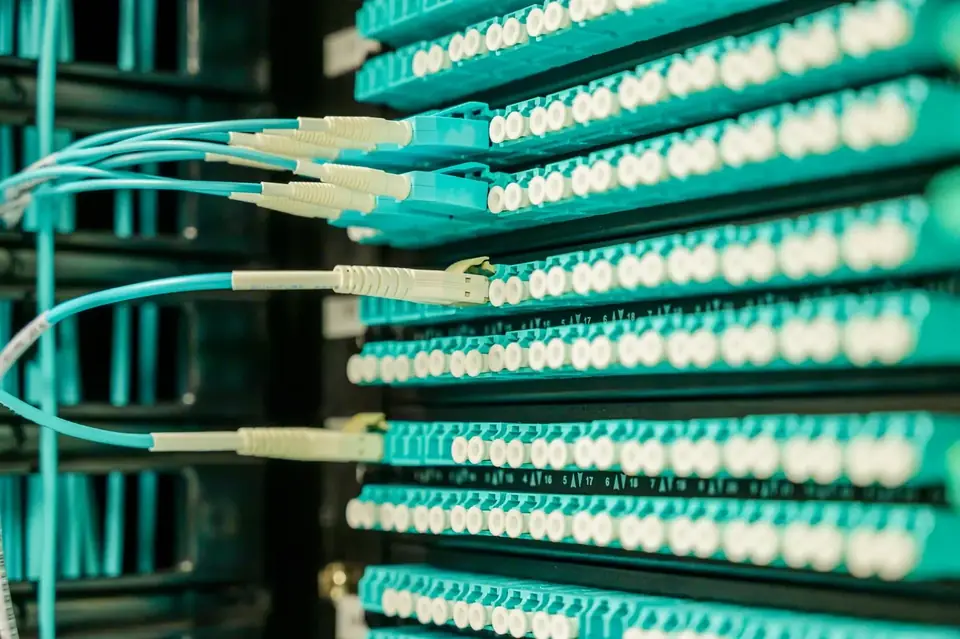
- Fiber backbone: multimode (OM3, OM4 or OM5) for shorter links inside buildings, and single-mode (OS2) for longer links, links between buildings and future higher speeds.
- Shielded or unshielded: shielded systems can help in electrically noisy industrial areas, but only when they are bonded correctly from end to end.
- One manufacturer system: cables, connectors and panels from a single system, installed by a certified installer, are usually required for a manufacturer’s extended warranty.
Standards to reference in your specification include ISO/IEC 11801 or ANSI/TIA-568 for cabling, TIA-569 for pathways and spaces, TIA-606 for labelling and administration, and TIA-607 for bonding and grounding.
Design rules that prevent problems later
- Keep each horizontal channel within the standard length: a 90 m permanent link plus cords, 100 m in total.
- Separate data cables from power cables and keep them away from noise sources such as motors and drives.
- Size trays and conduits with spare capacity for growth.
- Respect bend radius and avoid over-tightened cable ties, especially on Category 6A and fiber.
- Plan outlets for access points, cameras, displays and access control, not just desks.
- Use fire-rated cable types where the building’s fire safety design requires them, and firestop every penetration.
Testing, labelling and documentation
Insist on certification testing before you accept the work. For copper, every permanent link should be tested with a calibrated cable certifier against the specified category, and the full result files handed over. For fiber, require loss testing with a light source and power meter, and OTDR traces for backbone links.
- Labels at both ends of every cable and on panels, racks and outlets, following a documented scheme.
- As-built drawings showing outlet locations, cable routes and rack layouts.
- Test reports for 100% of links, not a sample.
- The manufacturer’s warranty certificate, where an extended warranty is part of the offer.
The data room checklist
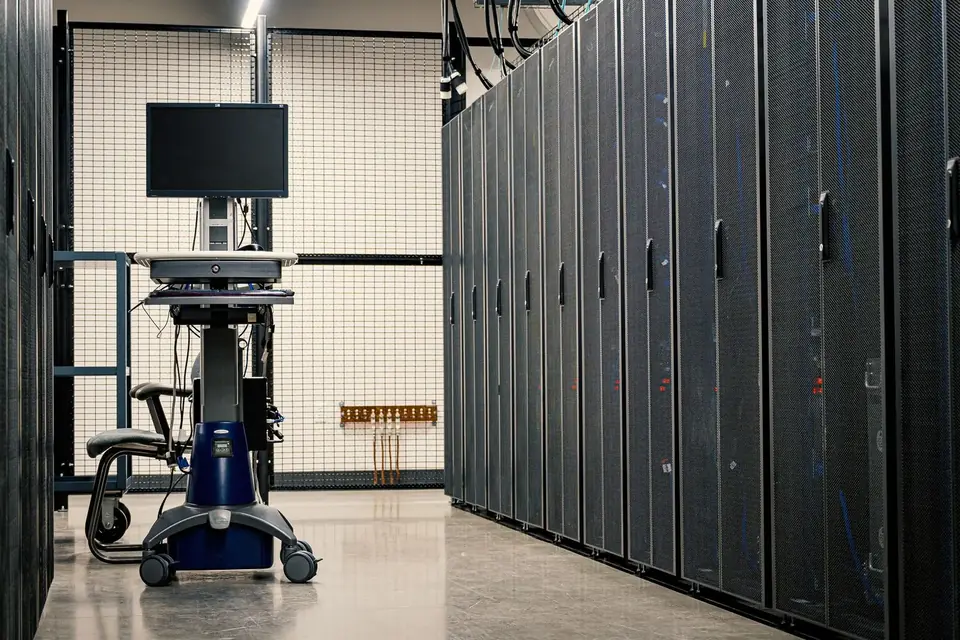
A data room, server room or main equipment room concentrates risk in one place. Specify it as a complete system:
| Area | What to specify |
|---|---|
| Space | A dedicated room with no water pipes above the racks, controlled access and room for growth |
| Racks and cable management | Rack sizes and loads, vertical and horizontal managers, and a hot and cold aisle layout |
| Power | Dedicated circuits, UPS sized for the IT load with redundancy, generator backup and metered PDUs |
| Cooling | Cooling sized for the IT heat load with standby capacity, independent of the comfort system |
| Earthing and bonding | Racks, trays and equipment bonded to a telecom earthing busbar connected to the building earth |
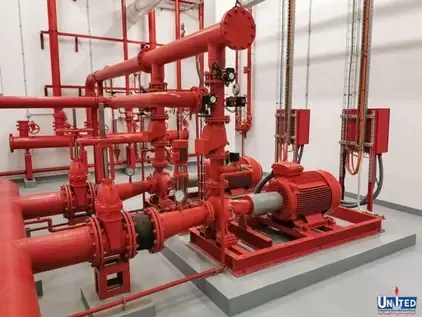
| Fire protection | Early smoke detection and clean-agent suppression such as FM-200 or Novec, integrated with the fire alarm |
| Security and monitoring | Access control, CCTV and sensors for temperature, humidity and water leaks, with alerts |
Larger facilities may use the TIA-942 data center standard as a reference for availability and design. For a typical company server room, the points above are the practical minimum to agree with your contractor.
How to compare offers
- The same cable category, fiber type and manufacturer system in every offer, or clearly priced alternatives.
- The testing scope: 100% certification with result files, not visual checks.
- Labelling, as-built documents and the warranty included in the price.
- Data room items such as UPS, cooling, fire suppression and earthing clearly included or excluded.
- Active equipment such as switches and Wi-Fi specified by brand, model and licences, with support terms.
- A realistic programme coordinated with the civil, electrical and fit-out works.
How MarkSphinx helps
MarkSphinx delivers active and passive IT networks, from structured cabling and fiber to switching, Wi-Fi, data centers and IP telephony.
- Supply and installation of IT infrastructure, active and passive network, for Liptis Pharmaceuticals.
- Passive and active networks, PBX implementation and IT room installation for the Egyptian Red Crescent in Helwan.
- Passive components and network infrastructure for etisalat by e&.
- Data center maintenance covering servers, storage, switches and UPS for the Egyptian General Book Organization.
- Precision cooling, UPS and FM-200 or Novec suppression for IT rooms, with partners such as Extreme Networks, Ruckus, Huawei eKit and Commvault.
Data rooms depend on sound earthing and fire protection; see why factories measure earthing and preparing fire systems for civil-defence approval.
Frequently asked questions
Cat6 is enough for many office desks. Cat6A is the safer choice for Wi-Fi access points, higher-power PoE devices and links that may need 10 Gb/s over long runs. Many owners choose Cat6A for new buildings.
A cable can pass a simple continuity test and still fail at the speed it was bought for. Certification tests each link against the performance limits of its category, and it is usually required for the manufacturer’s warranty.
It depends on how critical the room is, the building’s fire safety design and the authority’s requirements. Many owners choose early detection with clean-agent suppression to protect equipment without water damage; your fire safety designer should confirm the approach.
Yes. One contractor for passive and active work means one party is responsible for the network working end to end. MarkSphinx delivered both for Liptis Pharmaceuticals and the Egyptian Red Crescent.
This article is general technical guidance, not legal or regulatory advice. Requirements depend on the building type, its use and the current rules of the relevant authority, so confirm them with the authority or a qualified consultant before you act.